
Fruiting body vs mycelium: what really changes in a mushroom supplement
One detail on the label of a mushroom supplement says a lot about the product, yet it is easy to miss: which part of the mushroom is used. Fruiting body or mycelium? Both come from the same organism, but they do not contain the same compounds, they are not grown the same way, and they do not lead to the same final product. Here is how to tell them apart and how to read a label without being swayed by impressive numbers.
In short
- The fruiting body is the visible part of the mushroom. The mycelium is the network of fine threads that grows inside the growing medium.
- Mycelium is often grown on cereal grains such as rice or oats. If the grain is not separated, the final product can contain a lot of starch.
- Beta-glucans are fibres found in the mushroom cell wall. Starch is an alpha-glucan, and a test for "polysaccharides" does not tell the two apart.
- A clear label states the Latin species name, the part used, the form (powder or extract) and the amount per serving.
- Research on functional mushrooms is still mostly preclinical. In Switzerland, no health claims are authorised for the mushrooms themselves.
Fruiting body vs mycelium: two parts of one organism
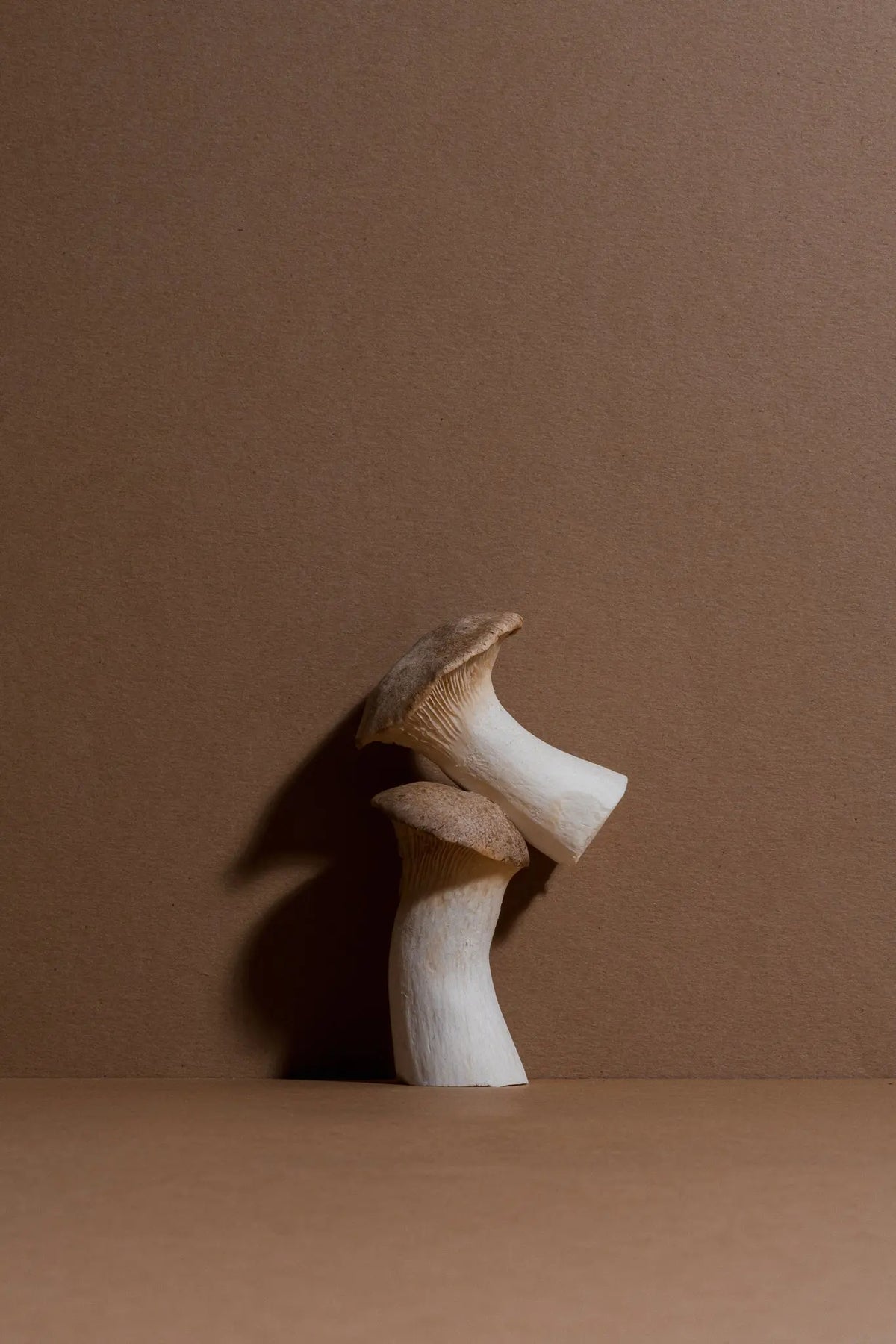
A mushroom is more than what you see in the forest. The visible part, with its cap or spines, is called the fruiting body. It is the reproductive organ that produces and releases spores, and it only appears at a later stage of growth, when conditions are right.
The mycelium is the vegetative part: a web of very fine threads, called hyphae, that spreads through wood, soil or a growing medium to feed. It exists before the fruiting body and can live for a long time without ever producing one.
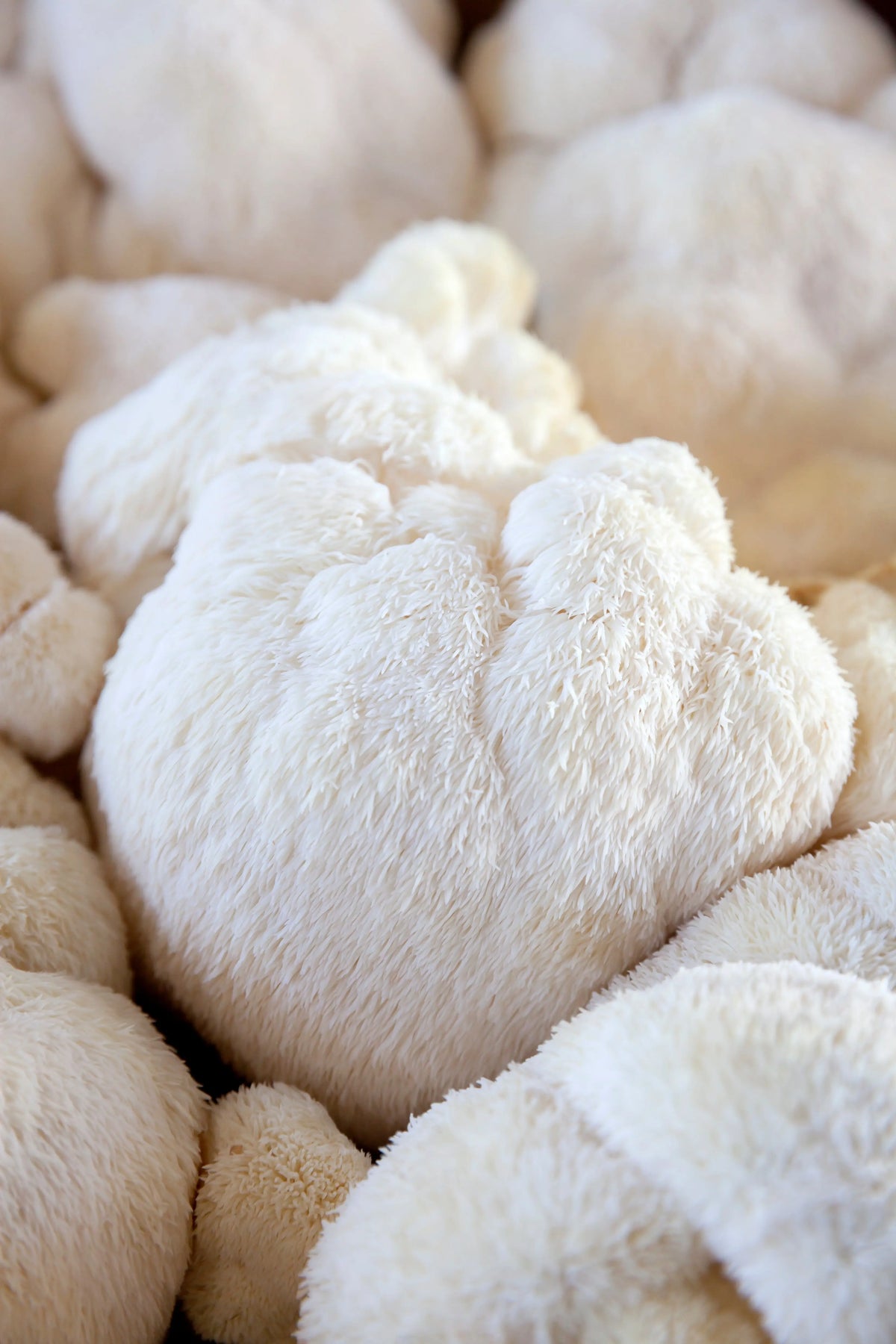
Both share the same genetic material, but not exactly the same composition. Lion's mane (Hericium erinaceus) is a good example: hericenones are mainly described in the fruiting body, while erinacines are associated with the mycelium. Choosing one part or the other means choosing a different profile of compounds.
Mycelium on grain: where the starch comes from
The most practical difference lies in cultivation. Fruiting bodies are harvested and easily separated from their substrate, usually wood or sawdust. Mycelium, on the other hand, is often grown directly on sterilised cereal grains such as rice or oats.
At harvest, the threads are very hard to separate from the grain they have colonised, so many products simply grind everything together. This is often called "mycelium on grain". The result does contain mushroom, but also a significant share of starch from the substrate, and labels do not always say so.
This is not a safety issue. It is a transparency issue: you are paying for mushroom, and part of what you get may be cereal. Some mycelium is grown in liquid culture through fermentation, which makes it possible to recover the mycelium alone. Again, only a precise label tells you what you are buying.
Beta-glucans: why the number alone is not enough
Beta-glucans are fibres in the mushroom cell wall. They are among the most studied compounds, which is why packaging often highlights them.
The catch is in how they are measured. Many tests measure "polysaccharides" in the broad sense, and cereal starch is a polysaccharide too, from the alpha-glucan family. A mycelium-on-grain product can therefore show a high polysaccharide figure that mostly reflects the starch of its substrate.
What matters is precise wording: "beta-glucans" rather than "polysaccharides", ideally with a test method that separates alpha- from beta-glucans. Our article on beta-glucans and food supplements goes further into the topic and into what research actually shows.
Mushroom powder or mushroom extract?
Mushroom cell walls contain chitin, a fibre the human body digests very poorly. That is why there are two broad types of product:
- Mushroom powder: the mushroom (or mycelium) is dried and ground. Nothing is concentrated or removed.
- Extract: the mushroom is treated with a solvent, usually water, sometimes alcohol, or both in turn (dual extraction). Water mainly draws out water-soluble compounds such as polysaccharides, while alcohol draws out compounds such as the triterpenes found in reishi.
You may see a ratio such as "10:1". It shows how much raw material was used to make one part of extract. It is useful information, but it says nothing about which part of the mushroom was used or about the actual content of compounds. A concentrated extract of mycelium on grain is still an extract of mycelium and grain.
How to read a mushroom supplement label
- The Latin name: Hericium erinaceus, Ganoderma lucidum, Polyporus umbellatus... A trade name alone is not enough.
- The part used: fruiting body, mycelium or a blend. If it is not stated, it is worth asking the brand.
- Signs of a substrate: terms such as "fermented rice", "oats" or "mycelial biomass" often point to mycelium on grain.
- Powder or extract, and the extraction method if given.
- The amount per serving: in mg or ml, mushroom by mushroom, with no "proprietary blend" hiding the proportions.
- Origin and growing method: organic, country of cultivation, identified manufacturer.
For a broader checklist, see 7 criteria for choosing a quality supplement in Switzerland and how to read a supplement label in Switzerland.
Why Hymne uses selected extracts
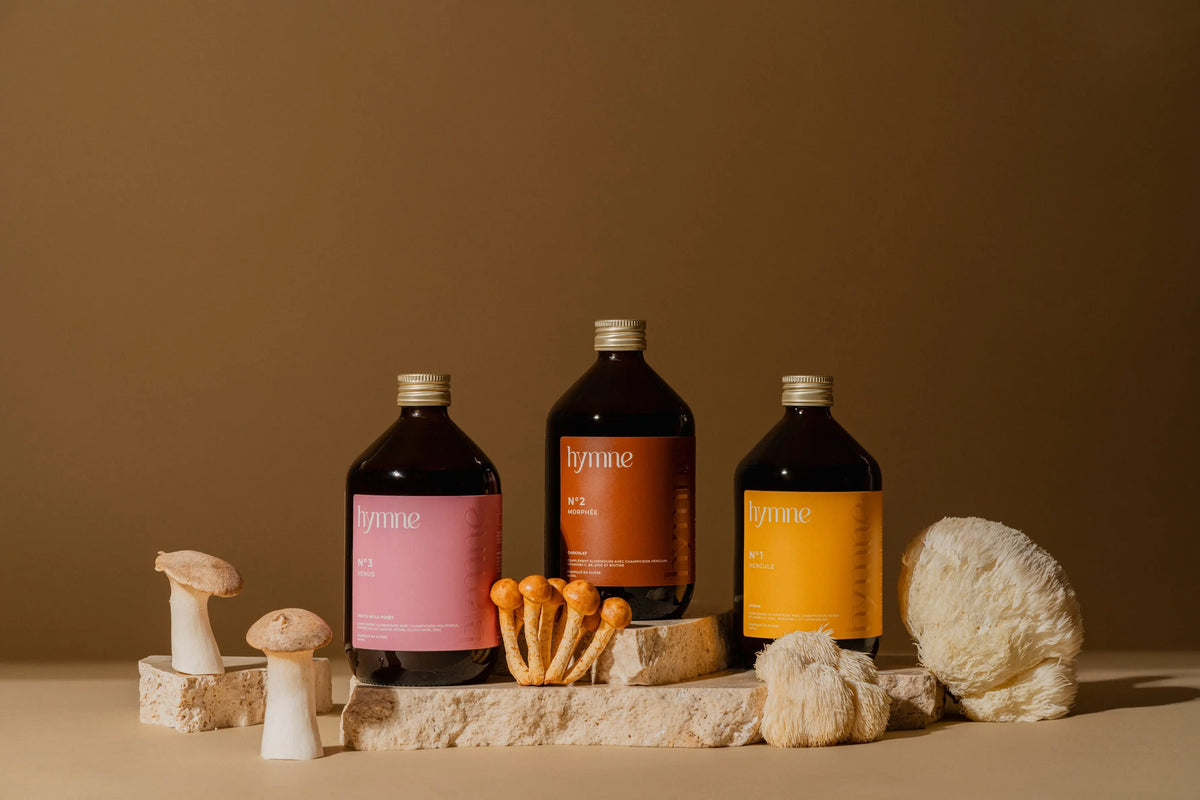
Hymne uses organic mushroom extracts selected in Europe and added without heat treatment to liquid formulas made in Switzerland. The choice rests on three standards:
- Traceability: each mushroom is identified by species and comes from a European organic supply chain.
- Clarity: one serving is a 15 ml tablespoon in a large glass of water, once a day. A 450 ml bottle holds 30 servings.
- A lean formula: no added sugar, no GMOs, no allergens, and none of the excipients capsules often require.
Our formulas were developed in Geneva with a naturopath. If you would like details on the raw material in any of them, our team is happy to answer. It is exactly the kind of question you are entitled to ask any brand.
Frequently asked questions
Is mycelium worse than the fruiting body?
Not necessarily. They are two different parts with different compositions. The real issue is transparency: knowing which part is used and whether the product also contains the growing medium.
How can I tell if a product contains cereal starch?
Look for rice, oats, "grain" or "biomass" in the ingredients. If in doubt, ask the brand which part is used and what its specifically measured beta-glucan content is.
Is a high polysaccharide content a sign of quality?
Not on its own. Polysaccharides include starch. Only a specific beta-glucan test lets you compare products fairly.
Do functional mushrooms have proven effects?
They are widely studied, mostly in preclinical research. In Switzerland, no health claims are authorised for the mushrooms themselves, so be wary of promises backed by percentages.
You now know what to look for on a label. To see how we present our own formulas, mushroom by mushroom, explore the Hymne range.
Read more
What Lion's Mane mushroom really is, what the research says and how to choose a supplement without exaggerated promises.
Pharmacies, drugstores, organic shops, Swiss webshops or foreign sites: how to buy functional mushrooms in Switzerland with confidence, label and regulations included.