
Zinc, Iron, Vitamin C: How to read a food supplement label in Switzerland
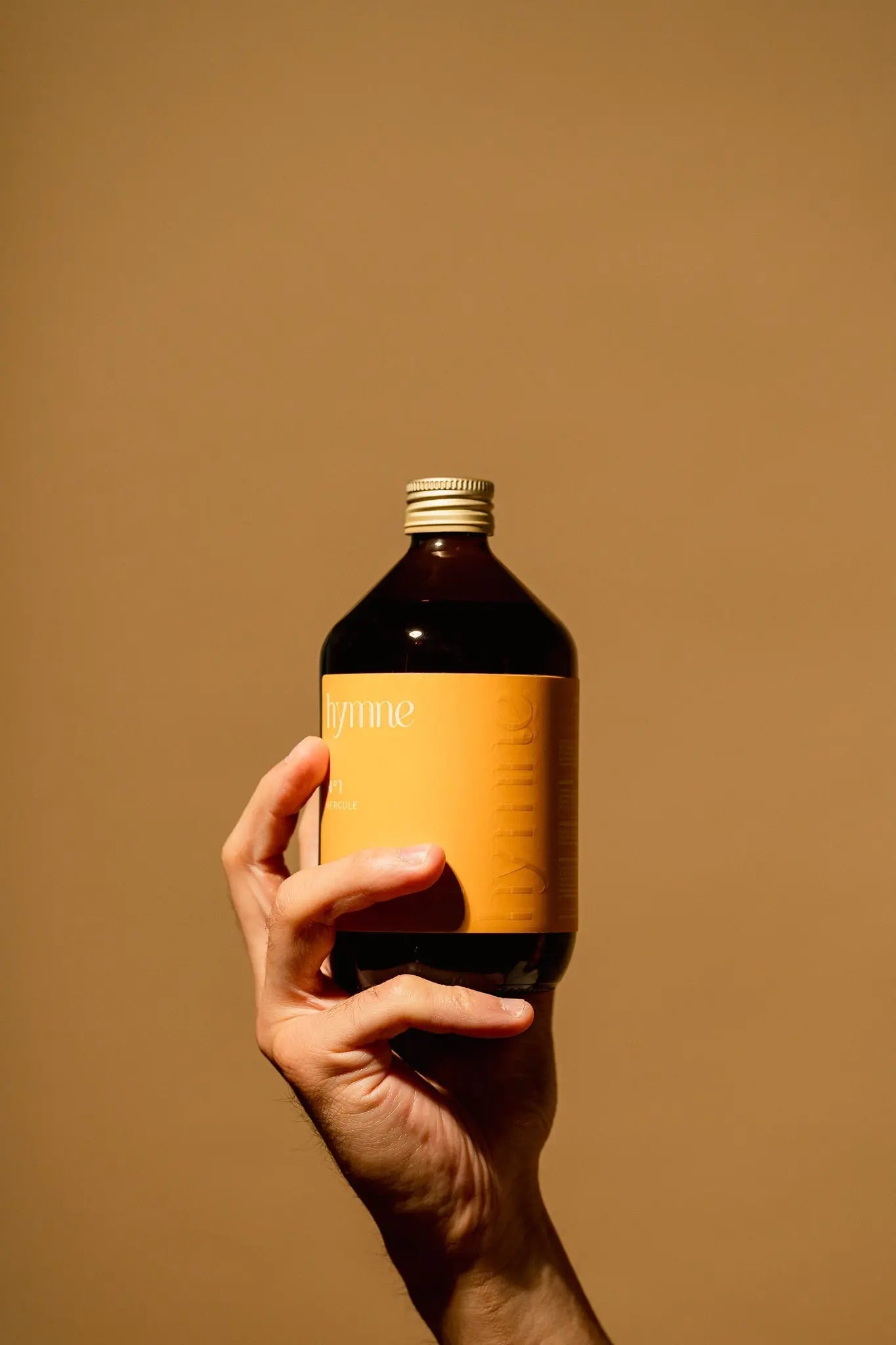
You're holding a bottle of a food supplement. The ingredient list is long, abbreviations abound, and percentages seem to come out of nowhere. How do you make sense of it all? Here's a practical guide to deciphering a food supplement label according to Swiss standards — illustrated with Hymne formulas.
The mandatory statement: "food supplement"
In Switzerland, any product sold as a food supplement must visibly display the statement "food supplement" on its packaging. This is a requirement of the OCpAl (Ordinance on Food Supplements, RS 817.022.104).
If this statement is absent, the product does not comply with Swiss regulations — a primary red flag.
The ingredient list
Ingredients are listed in descending order by weight. The first ingredient is therefore always the most abundant in the formula. For a liquid extract like Hercule, you will find basic excipients (water, vegetable glycerin for example) at the top, followed by active extracts and micronutrients.
The Latin names of functional mushrooms often appear in parentheses: Ganoderma lucidum (reishi), Hericium erinaceus (Lion's Mane), Polyporus umbellatus (polyporus), Agaricus subrufescens (agaricus).
Nutritional values and Reference Intake (RI)
For each micronutrient present, the label generally indicates the amount per serving and the percentage of the Reference Intake (RI) — formerly known as RDA (Recommended Daily Allowance).
The RI is established for an average healthy adult. For example:
- RI Vitamin C: 80 mg/day
- RI Zinc: 10 mg/day
- RI Iron: 14 mg/day
- RI Biotin: 50 µg/day
- RI Vitamin B6: 1.4 mg/day
For a functional claim to be legally usable on the label or in a brand's communication, the product must generally provide at least 15% of the RI per serving.
Claims: what the law allows on the label
A claim is any statement that suggests an food or ingredient has particular properties. In Switzerland, only claims listed in the positive list of the OALDal can be used.
Examples of legally authorized claims you may find on Hymne products:
- ✅ "Zinc contributes to the normal function of the immune system"
- ✅ "Vitamin C contributes to the reduction of tiredness and fatigue"
- ✅ "Iron contributes to normal red blood cell formation"
- ✅ "Biotin contributes to the maintenance of normal hair"
Claims to avoid on a label
Certain formulations are red flags:
- ❌ "Boosts your immunity" → unauthorized claim
- ❌ "Reduces stress" → unauthorized therapeutic claim
- ❌ "Clinically proven" without reference to a published clinical trial → misleading
- ❌ "Cures", "treats", "prevents" a disease → strictly prohibited for a food supplement
Dosage and warnings
The label must indicate the recommended daily dose and state that this dose should not be exceeded. It must also specify that the product should be kept out of reach of children, and recommend consulting a doctor in case of pregnancy, breastfeeding, or medication.
These statements are not mere filler: they are mandatory under the OCpAl and are a sign of the manufacturer's seriousness.
Read more
Capsules, tablets, powders, liquids—the dietary supplement market offers many formats. Hymne has chosen liquid for its entire range. This is not a coincidence or merely an aesthetic choice. Here's ...
Four mushrooms, three formulas, one legitimate question: which one is right for you? At Hymne, each functional mushroom has been selected for its specific biochemical profile and its history in tra...