

Beta-glucans and dietary supplements: what science says in 2025
The term "beta-glucans" often appears in product sheets for mushroom-based food supplements. But what exactly are they? What is their place in scientific literature? And how are they found in Hymne formulas? A rigorous overview.
What are beta-glucans?
Beta-glucans are polysaccharides — complex sugar molecules — found in several natural sources: oats, barley, and notably mushrooms. In the fungal kingdom, they form part of the cell wall of mushrooms and have been the subject of sustained scientific interest for several decades.
Their molecular structure varies according to the species: the beta-1,3/1,6-glucans from mushrooms have a different three-dimensional configuration from those found in cereals, making them a subject of study in their own right.
What science says
Research on fungal beta-glucans is active and international. Teams in Asia, Europe, and North America regularly publish on their interaction with the immune system, particularly with certain C-type lectin family receptors (such as Dectin-1).
These studies explore the mechanisms by which beta-glucans interact with immune cells in vitro and in vivo. While the results are promising, most available studies remain preclinical or have methodological limitations that prevent definitive conclusions from being drawn at this stage.
Under Swiss law, mushroom beta-glucans do not benefit from specifically authorized health claims to date. In contrast, beta-glucans from oats and barley have recognized claims regarding cholesterol, which demonstrates the seriousness of the European and Swiss evaluation process.
Beta-glucans at Hymne: transparency and rigor
The four functional mushrooms in the Hymne range — reishi, agaricus, hericium, and polyporus — naturally contain beta-glucans. Hymne values this natural richness from a nutritional perspective, without making any therapeutic claims.
The beta-glucan content can vary depending on the extraction method, the growing substrate, and the part of the mushroom used (cap, mycelium, or whole body). Hymne selects its extracts according to strict quality criteria and rigorous standardization.
How to evaluate a functional mushroom supplement?
If you wish to compare mushroom-based products, here are some relevant criteria to examine:
- Beta-glucan content: it should ideally be indicated on the label or product sheet
- Extraction method: aqueous or hydroalcoholic extracts offer better bioavailability than dried mushroom powder
- Part of the mushroom used: the fruiting body (cap) is generally preferred for beta-glucans, the mycelium for other compounds
- Traceability: the origin of the mushrooms and cultivation conditions directly influence the quality of the final product
Beta-glucans are at the heart of the growing interest in functional mushrooms. Science is advancing, cautiously and seriously. While awaiting more consolidated conclusions, Hymne offers formulas rich in natural compounds, formulated in Switzerland, in strict compliance with Swiss food regulations.
Read more
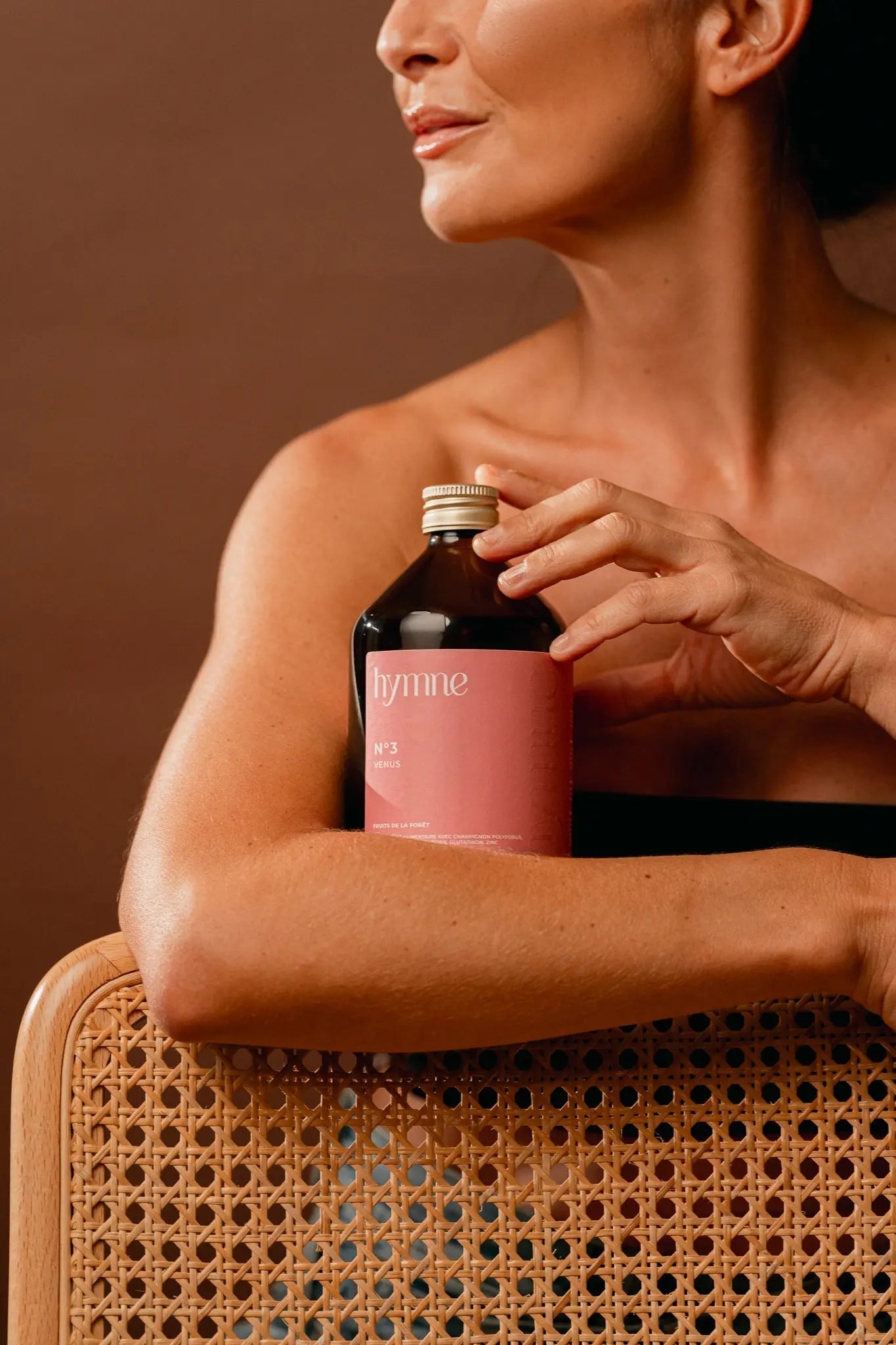
Beauty is not decreed. It is built, day after day, from within. This conviction guided the formulation of Vénus, Hymne's liquid food supplement dedicated to daily radiance. Polyporus, vegan collage...

Winter takes a toll on the body. Short days, cold weather, and a diet that's often heavier and less varied — all leave their mark. Spring is the ideal season to restart a consistent wellness routin...