Buying functional mushrooms in Switzerland: where to shop and what to check
Lion's Mane, Reishi, Polyporus, Agaricus: functional mushrooms are now sold in pharmacies, drugstores, organic shops and on countless websites. There is plenty of choice and quality varies widely. This guide explains where to buy functional mushrooms in Switzerland, what Swiss law requires on the label and which warning signs should make you put the bottle back.
In short
- In Switzerland, mushroom-based food supplements fall under food law (the Ordinance on Food Supplements), not medicines law.
- They need no approval before going on sale: the company selling them in Switzerland is responsible for compliance, checked by the cantonal food authorities.
- No health claim is authorised for the mushrooms themselves. Only certain nutrients, such as vitamins and minerals, may carry claims, taken from an official list.
- A product ordered from a foreign website is not necessarily made for the Swiss market: composition, doses and labelling may not meet Swiss rules.
- To compare prices, work out the cost per day at the recommended dose rather than the price per bottle.
Where to buy functional mushrooms in Switzerland
There is no single best channel. Each has its strengths, and quality depends first on the product, not on where it is sold.
Pharmacies and drugstores
Alongside pharmacies, Switzerland has a dense network of drugstores (drogueries, Drogerien) staffed by trained advisers. Their main asset is advice: a professional can guide you, check for possible interactions with medication and tell you whether a product suits your situation. On the other hand, the range of functional mushrooms is often limited, and advice comes at a price. A product sold in a pharmacy is still a food supplement: it has not been assessed like a medicine.
Organic shops and specialist grocers
Organic shops often stock powders, capsules and sometimes liquid extracts. They are a good place to find certified organic products. Advice varies, so read the label yourself, especially the part of the mushroom used and the amount per dose.
Swiss online shops
Many Swiss brands sell directly online. You get full product information and can contact the brand. Before ordering, check three simple things: a registered company address in Switzerland, prices in CHF including VAT, and shipping from Switzerland.
Foreign websites and large marketplaces
Prices may look lower and the choice is huge. But a product shipped from abroad is not necessarily designed for Switzerland: a label in another language, different doses, claims that are banned here, or ingredients that are not permitted. Add delivery times, possible customs fees and customer service that is harder to reach. If something goes wrong, there is often nobody to contact in Switzerland.
What Swiss regulations say
In Switzerland, a food supplement is a foodstuff. Two ordinances matter most:
- The Ordinance on Food Supplements (OCpAl in French, VNem in German) defines what a supplement is, which nutrients it may contain, with maximum amounts for vitamins and minerals, and what must appear on the packaging.
- The Ordinance on Food Information (OIDAl in French, LIV in German) governs labelling and claims. Its Annex 14 lists the authorised health claims, word for word.
That list contains no health claim for functional mushrooms. A brand therefore cannot state that a mushroom improves memory, helps you sleep or protects against anything. A product that claims to prevent or treat a disease presents itself as a medicine, which is prohibited for a food. Finally, some ingredients classed as novel need specific authorisation before they can be sold.
Mandatory information on the label
A food supplement sold in Switzerland must show, among other things:
- the name "food supplement" (in at least one official language);
- the names of the nutrients or substances that characterise the product, for example the name of the mushroom;
- the recommended daily dose and a warning not to exceed it;
- the amount of each nutrient or substance per daily dose, plus the percentage of reference values for vitamins and minerals;
- a statement that supplements should not replace a varied and balanced diet and a healthy lifestyle;
- a statement to keep the product out of reach of young children;
- the ingredient list, net quantity, best-before date, country of production and the name and address of the responsible company.
Our article Zinc, iron, vitamin C: how to read a food supplement label in Switzerland explains the nutrition values in detail.
Quality signals that make the difference
Beyond the legal requirements, a few clues help you spot a serious product:
- The Latin species name, such as Hericium erinaceus for Lion's Mane. A brand name alone is not enough.
- The part used: fruiting body, mycelium or sclerotium. Their composition differs.
- The amount of mushroom per dose, clearly stated, without a "proprietary blend" that hides the proportions.
- Origin and cultivation: country of origin, organic farming, an identified supplier.
- Preparation: dried mushroom powder, extract or liquid. A powder is not the same as an extract.
- Transparency: a brand that answers your questions and gives a contact in Switzerland.
For more detail, see our 7 criteria for choosing a quality food supplement in Switzerland.
How much does a month of functional mushrooms cost?
The price of the bottle says little on its own. What matters is the cost per day at the recommended dose, and how much mushroom you actually get. Divide the price by the number of daily doses in the pack, then compare the amount of mushroom per dose. A cheap product with a low dose is not a saving.
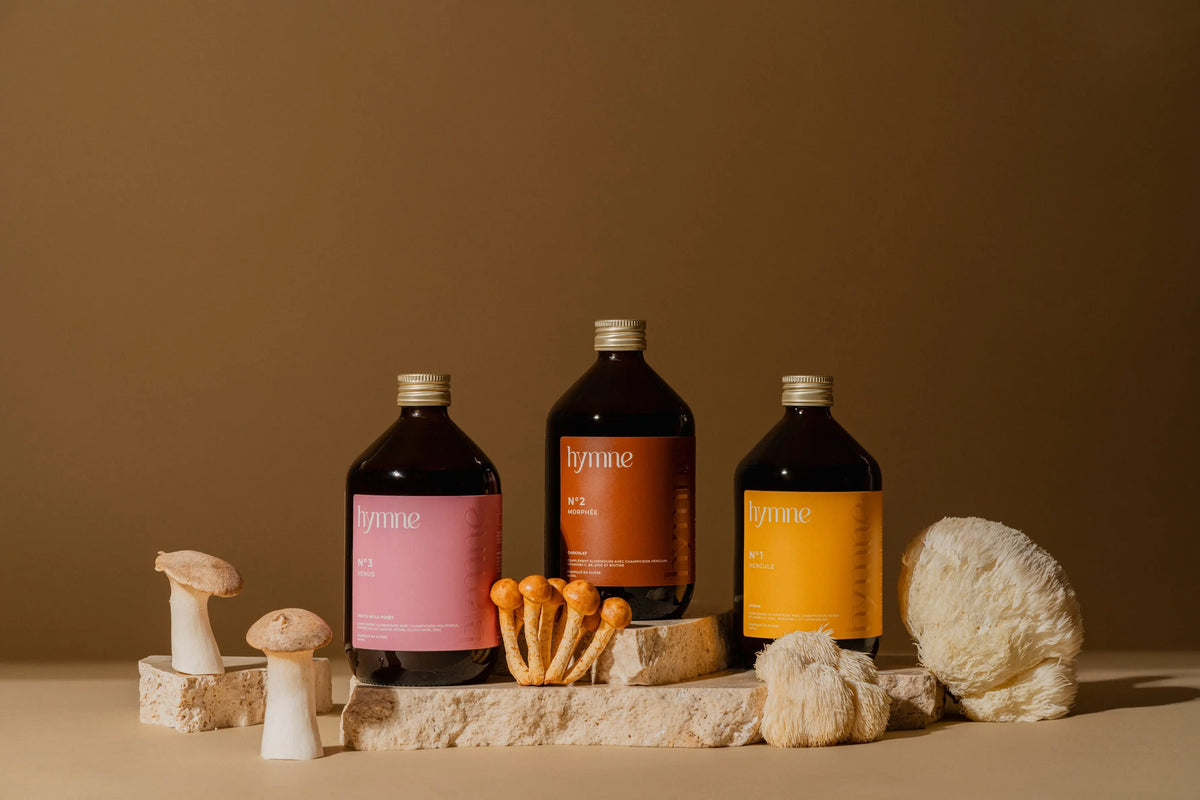
As an example, a 450 ml Hymne bottle holds 30 doses of 15 ml, which is one month. At CHF 54.90, that is about CHF 1.83 a day; at CHF 69.00, about CHF 2.30 a day.
Common traps to avoid
- Health promises such as "boosts", "cures", "strengthens" or "anti-stress". In Switzerland these claims are banned for mushrooms. They point to a non-compliant product or a careless brand.
- Non-compliant imports: untranslated labels, vitamin doses above Swiss maximums, ingredients that are not permitted.
- Reviews doing the marketing: a testimonial is not proof, and brands may not use reviews to get around the ban on health claims.
- Vague dosing: "rich in mushrooms" without a figure tells you nothing.
- Automatic subscriptions that are hard to cancel: read the terms before you confirm.
Buying from Hymne
Hymne is a Swiss brand of liquid food supplements with functional mushrooms, formulated in Geneva with a naturopath and made in Switzerland. The mushrooms are organic, sourced in Europe and not heat-treated. Our formulas contain no added sugar, no GMOs and no allergens, and we deliver within Switzerland only. The range includes Morphée (Lion's Mane), Vénus (Polyporus) and Hercule (Reishi and Agaricus), the latter currently available in limited quantities. To see which one fits your routine, read our comparison of the four mushrooms.
Frequently asked questions
Do I need a prescription to buy functional mushrooms in Switzerland?
No. They are food supplements sold over the counter. Do ask a health professional first if you are pregnant, breastfeeding, taking medication or allergic to mushrooms.
Is a product from a pharmacy always better?
Not necessarily. A pharmacy offers advice, but the product is still a food supplement under the same rules. Judge it by its label.
Can I order from a foreign website?
You can, but the product may not comply with Swiss law, and if there is a problem you often have no contact in Switzerland.
How can I tell whether a claim is authorised?
Authorised claims relate to specific nutrients and use fixed wording, for example: "Zinc contributes to the maintenance of normal skin." A promise attributed to the mushroom itself is not authorised.
Want to compare for yourself? Discover Morphée with Lion's Mane or browse the full Hymne range: full composition and amounts per dose are listed on every product page.
Read more
Fruiting bodies and mycelium differ in composition and cultivation. Learn how to spot grain starch, read beta-glucan figures and check a mushroom supplement label.
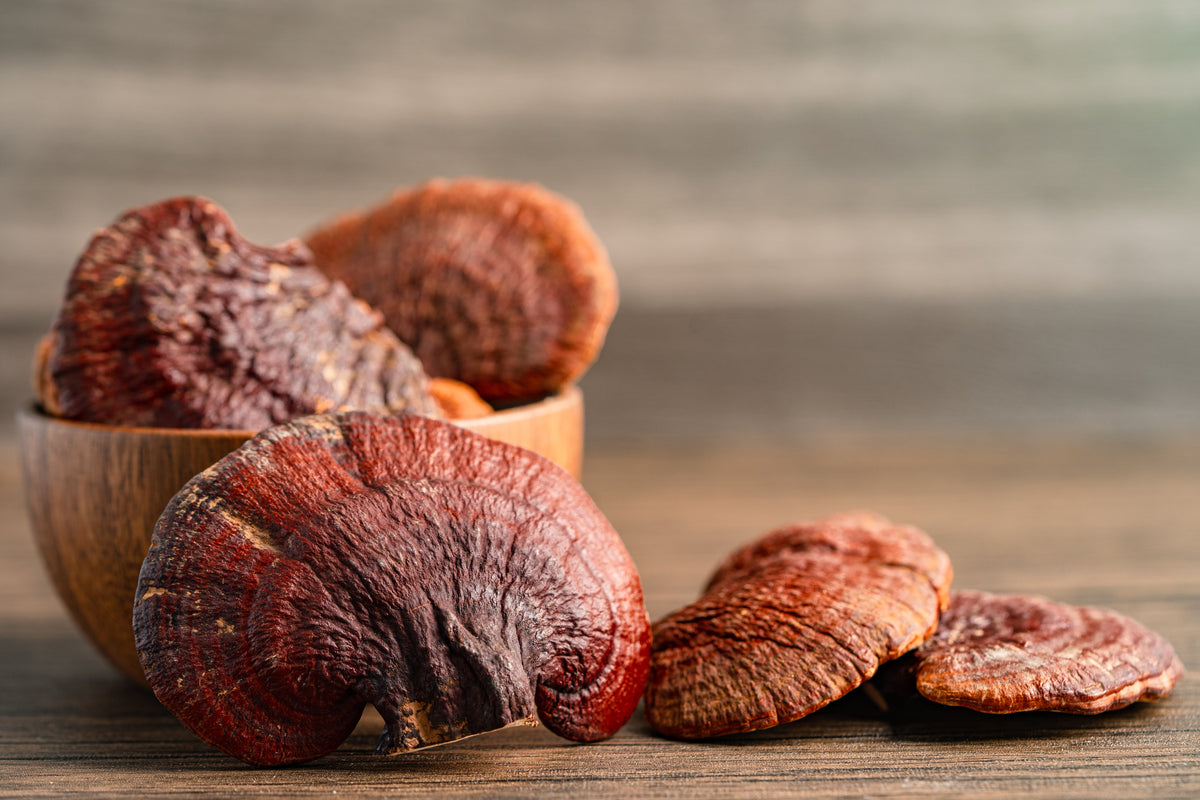
Everything to know about reishi mushroom: origin, compounds, formats, what research really shows and how to choose a quality product.