
Reishi Mushroom (Ganoderma lucidum): The Complete Guide
Reishi is probably the functional mushroom with the longest history in Asian tradition, and one of the most studied. It is also one of the most surrounded by promises. This guide covers what reishi mushroom is, what it contains, what the research actually says and how to choose a quality product.
In short
- Latin name: Ganoderma lucidum. Called lingzhi in China and reishi in Japan.
- A hard, bitter mushroom that is not used for cooking: it is taken as a decoction, powder or extract.
- Its most studied compounds: triterpenes, which give it its bitterness, and polysaccharides, including beta-glucans.
- Research is extensive but mostly preclinical: in Switzerland, no health claim is authorised for reishi.
- What to check before buying: fruiting body or mycelium, type of extraction, origin and amount per serving.
What is reishi mushroom?
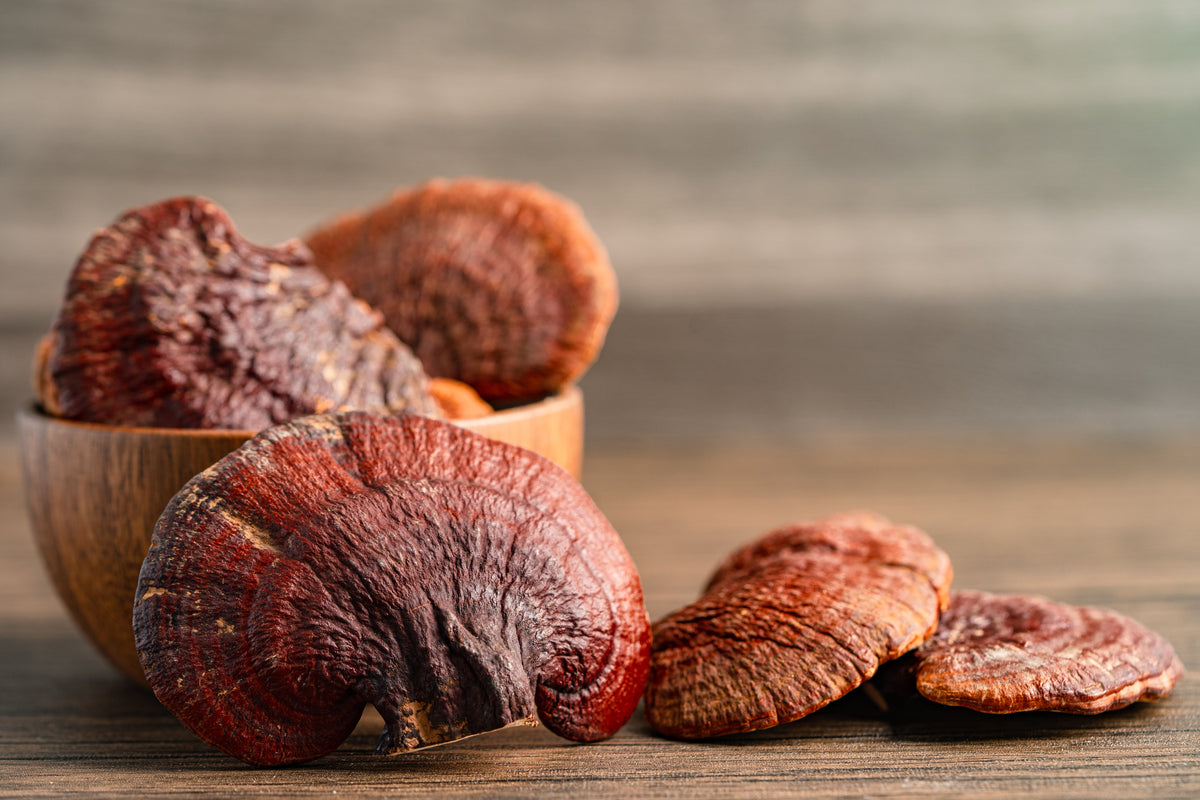
Reishi is a polypore: a mushroom without gills, with hard, woody flesh, that grows on the stumps and trunks of hardwood trees. Its kidney- or fan-shaped cap is reddish brown and glossy, as if lacquered, which explains its Latin name: lucidum means "shiny".
It grows wild in Asia, Europe and North America, but is uncommon. The reishi used today is therefore almost always cultivated, on wooden logs or on a plant-based substrate.
Worth knowing: mycologists debate its classification. Part of the reishi cultivated in Asia appears to belong to a very close species, Ganoderma lingzhi. In shops, both are usually sold simply as reishi.
A long history in Asian tradition
In China, lingzhi is mentioned in ancient texts and has been depicted in art, sculpture and architecture for centuries. It became a cultural symbol of longevity and prosperity. In Japan it is called reishi, the name now used in Europe and English-speaking countries.
This place in tradition explains its fame. It is not, in itself, scientific proof of any effect.
What reishi contains: triterpenes and polysaccharides
Reishi contains several families of compounds. Two attract most of the research attention:
- Triterpenes, especially ganoderic acids. They give reishi its very bitter taste and dissolve mainly in alcohol.
- Polysaccharides, including beta-glucans, fibres found in the mushroom's cell walls. They dissolve mainly in hot water.
Because the two are not extracted the same way, some manufacturers combine a water extraction with an alcohol extraction, often called dual extraction. For more on these fibres, read Beta-glucans and food supplements: what the science says.
Fruiting body, mycelium or spores?
Three parts of reishi are found in products, and their composition differs:
- The fruiting body is the visible mushroom. It is the part used traditionally, and the one richest in triterpenes.
- The mycelium is the network of filaments growing in the substrate. When grown on grain, it can contain a lot of starch from that substrate.
- The spores are released by the cap and are sometimes sold as separate products, as powder or oil.
A serious label always states which part is used.
What does the research say about reishi?
Reishi has been the subject of a large number of publications. Most involve cells in the laboratory or animals. Human studies exist, but they are fewer, often small, and use very different extracts, which makes their results hard to compare.
That is why, in Switzerland as in the European Union, no health claim is authorised for reishi. A brand claiming that it "strengthens" or "cures" anything is not following the rules.
Reishi tea, powder or liquid extract
- Tea or decoction: the traditional form. Dried slices are simmered for a long time. The taste is very bitter.
- Powder: dried, ground mushroom, or a powdered extract. The two are not equivalent.
- Capsules: convenient, but they need a shell and sometimes excipients.
- Liquid: a ready-to-dilute extract, easy to measure, and often flavoured to soften the bitterness.
The pros and cons of each format are covered in Liquid supplements vs capsules: why the format matters.
How to choose a quality reishi supplement
- The part used: fruiting body, mycelium or spores, clearly stated.
- The extraction: water, alcohol or dual extract, rather than an unspecified powder.
- The origin: organic cultivation, with the country of origin and supplier identified. Like any mushroom, reishi can absorb substances from its growing medium.
- The dosage: the amount of reishi per serving, with no "proprietary blend".
- Transparency: a brand that talks about research cautiously, without miracle promises.
Our guide 7 criteria for choosing a quality food supplement in Switzerland covers these points in detail.
How to take reishi
Reishi is generally taken once a day, ideally at the same time. Always follow the dosage on the packaging and do not exceed it.
Ask a healthcare professional before taking it if you are pregnant or breastfeeding, if you take medication, especially anticoagulants or treatments for blood pressure or blood sugar, if you have surgery planned, or if you are allergic to mushrooms.
Reishi at Hymne
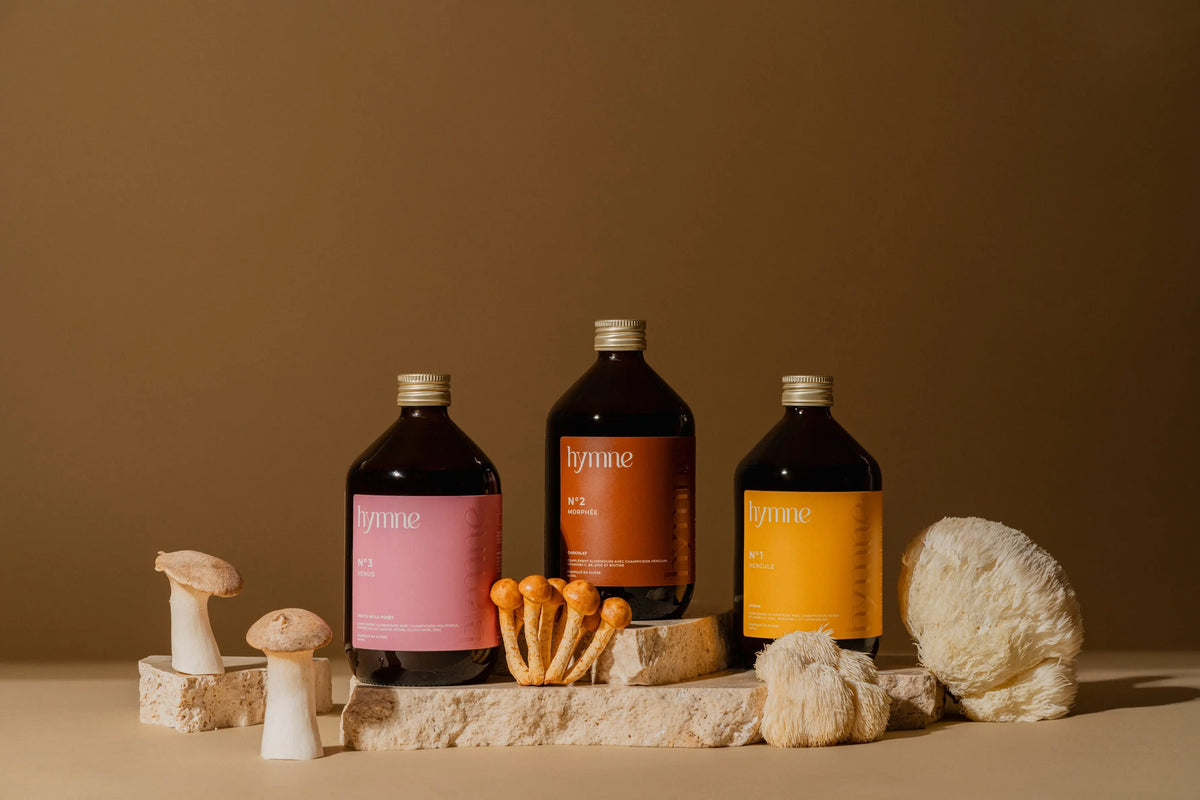
At Hymne, reishi is found in Hercule, combined with Agaricus blazei, another mushroom we introduce in Agaricus blazei: an unusual mushroom worth knowing. The formula is a lemon-flavoured liquid, enriched with vitamins C and B6 and zinc, and made in Switzerland (CHF 54.90). It is currently almost sold out.
Like all our formulas, it uses organic mushrooms sourced in Europe, with no heat treatment, no added sugar, no GMOs and no allergens. One 15 ml serving is taken in a large glass of water.
Frequently asked questions
Are reishi and lingzhi the same mushroom?
In everyday use, yes. Lingzhi is the Chinese name and reishi the Japanese one. Mycologists now distinguish Ganoderma lucidum from a close species, Ganoderma lingzhi, and both are often sold under the same name.
Why is reishi so bitter?
Its bitterness comes from its triterpenes. That is why it is rarely taken plain and is often flavoured in liquid formulas.
Can you take reishi every day?
Reishi supplements are designed to be taken daily, following the dosage on the pack. If you take medication, are pregnant or breastfeeding, ask a healthcare professional first.
Does reishi contain caffeine?
No. Reishi is a mushroom and contains no caffeine. "Reishi coffee" products get their caffeine from the coffee they contain.
To see how reishi compares with other functional mushrooms, read Reishi, Lion's Mane, Polyporus, Agaricus: which functional mushroom suits you?, then explore the full Hymne range, from Morphée with Lion's Mane to Vénus with Polyporus.
Read more
Pharmacies, drugstores, organic shops, Swiss webshops or foreign sites: how to buy functional mushrooms in Switzerland with confidence, label and regulations included.
Timing, consistency, cooking vs supplements, forms and precautions: simple guidelines for taking lion's mane properly, with no promises of effects.