
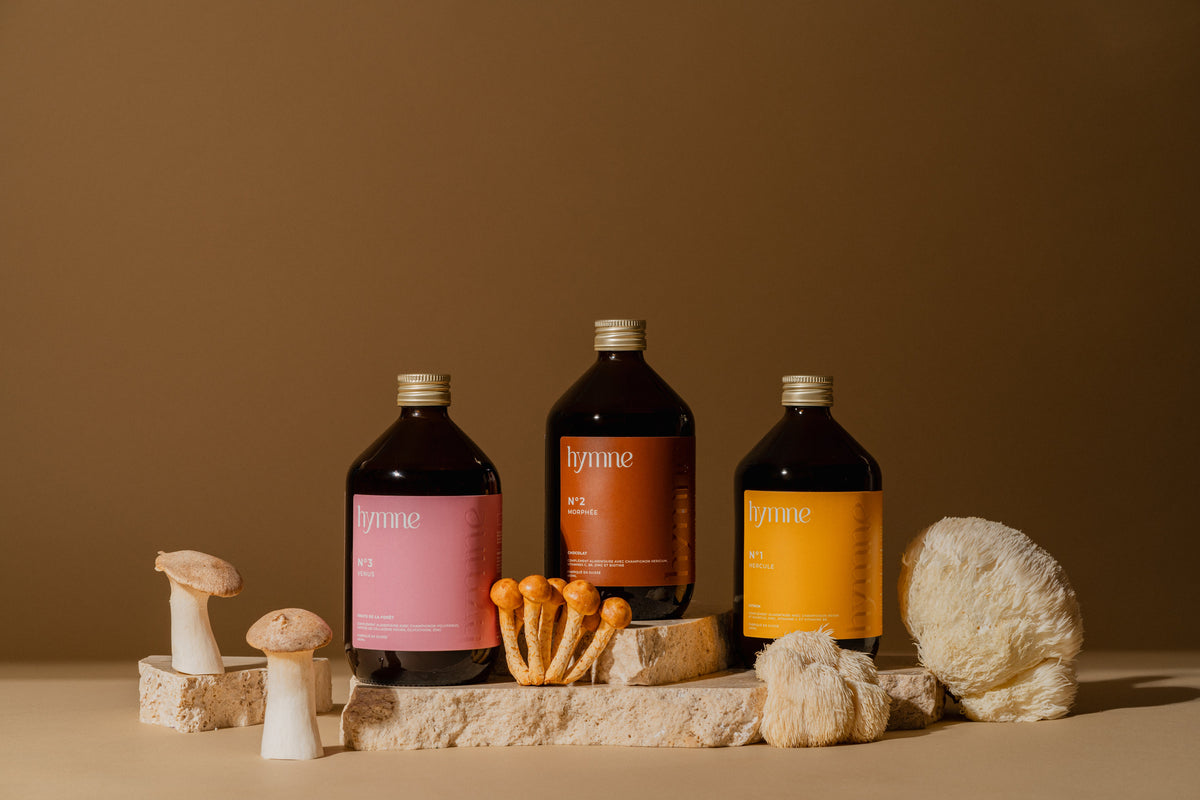
Lion's mane, reishi, cordyceps, chaga: a functional mushrooms comparison
Lion's mane, reishi, cordyceps and chaga are the four functional mushrooms people search for most. They often appear side by side in the same lists, yet they have almost nothing in common: not their appearance, not how they are grown, not the compounds researchers study. This factual comparison explains what sets them apart, with no promises and no shortcuts.
In short
- Lion's mane (Hericium erinaceus): an edible white mushroom with spines, studied for its hericenones and erinacines.
- Reishi (Ganoderma lucidum): a woody, bitter mushroom, studied mainly for its triterpenes and polysaccharides.
- Cordyceps: wild Ophiocordyceps sinensis is rare, so most products use cultivated Cordyceps militaris or fermented mycelium.
- Chaga (Inonotus obliquus): a black growth on birch trees, naturally high in oxalates.
- For all four, research is still mostly preclinical, and no health claims are authorised in Switzerland.
Functional mushrooms comparison table
| Mushroom | Latin name | Appearance | Compounds studied | Common forms | At Hymne |
|---|---|---|---|---|---|
| Lion's mane | Hericium erinaceus | White mass covered in long, hanging spines | Hericenones, erinacines, beta-glucans | Fresh for cooking, powder, capsules, liquid | Yes: Morphée |
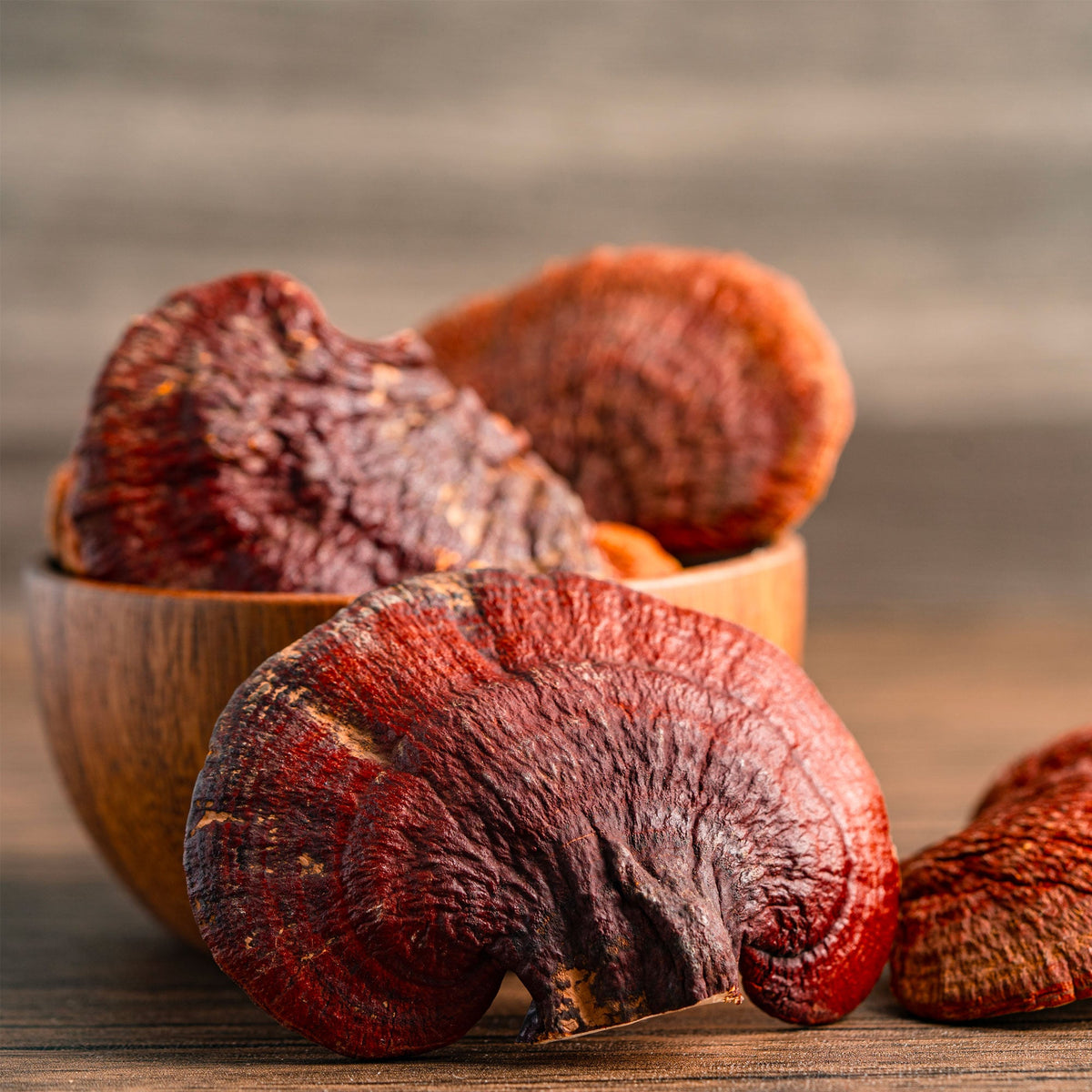
| Reishi | Ganoderma lucidum | Woody, reddish-brown cap with a lacquered shine | Triterpenes (ganoderic acids), polysaccharides, beta-glucans | Tea, powder, capsules, liquid extracts | Yes: Hercule (with Agaricus blazei) |
| Cordyceps | Ophiocordyceps sinensis, Cordyceps militaris | Small club-shaped stems, orange in C. militaris | Cordycepin, adenosine, polysaccharides | Powder, capsules, extracts | No |
| Chaga | Inonotus obliquus | Black, cracked growth on birch trees, orange-brown inside | Polysaccharides, melanins, triterpenes (betulin, inotodiol) | Tea, powder, extracts | No |
This table describes the mushrooms and the compounds research focuses on. It says nothing about effects: for all four, most studies are carried out in the lab or on animals, and Swiss regulations authorise no health claims for them.
Lion's mane: the edible mushroom with spines
Lion's mane grows on hardwood trees in Europe, Asia and North America. It is an edible mushroom prized in cooking for its crab-like texture, and it is easy to cultivate, so it is available all year round.
Its most studied compounds are specific to the species: hericenones, described in the fruiting body, and erinacines, associated with the mycelium. Few mushrooms show as clearly how much the part used shapes a product's composition. Our lion's mane guide covers this in detail.
Reishi: the woody mushroom of Asian tradition
Reishi is recognisable by its hard, reddish-brown cap with a varnished shine. Too woody and bitter to cook with, it has traditionally been prepared as a decoction or tea, particularly in China and Japan.
Research focuses on two groups of compounds: triterpenes, including the ganoderic acids behind its bitterness, and polysaccharides such as beta-glucans. Triterpenes are usually recovered with alcohol extraction and polysaccharides with water extraction, which is why it helps to know how an extract was made.
Cordyceps: one name, several mushrooms
"Cordyceps" actually refers to several species. Wild cordyceps, Ophiocordyceps sinensis, grows on the high Himalayan plateaus as a parasite of moth larvae. It is rare and very expensive, and its harvest raises sustainability concerns.
Most supplements therefore use either Cordyceps militaris, a cultivated species with orange stems, or mycelium produced by fermentation. The most cited compound is cordycepin, studied mainly in C. militaris, along with adenosine and polysaccharides. On a label, the exact species and the part used are essential information.
Chaga: the black growth on birch trees
Chaga does not look like a typical mushroom. What is harvested is a black, cracked mass called a sclerotium, which forms on birch trunks in cold regions such as Scandinavia, Russia and Canada. Inside, it is orange-brown.
It is studied for its polysaccharides, melanins and triterpenes such as betulin and inotodiol, partly linked to its host birch. Chaga grows slowly and is often wild-harvested. Worth knowing: it is naturally high in oxalates. If you have been advised to follow a low-oxalate diet, check with a health professional first.
What about Hymne?
Hymne offers a short range of liquid formulas made in Switzerland, with organic mushroom extracts selected in Europe:
- Morphée: lion's mane, chocolate flavour, with vitamins C and B6, zinc and biotin.
- Hercule: reishi and Agaricus blazei, lemon flavour, with vitamins C and B6 and zinc. Stock is currently limited.
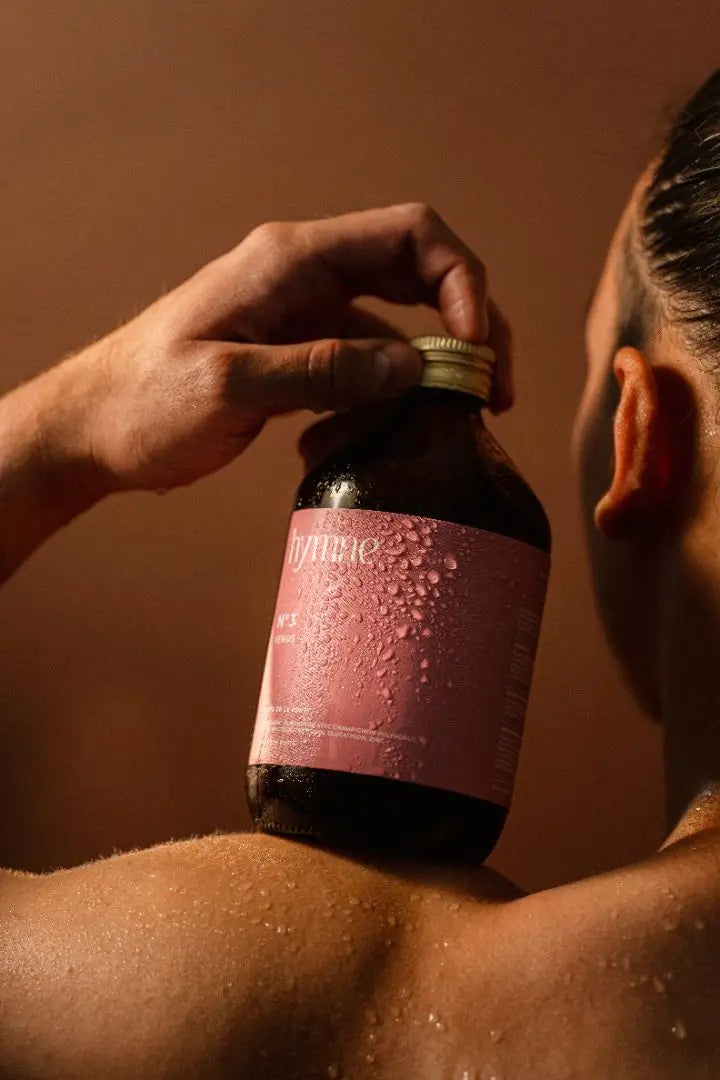
- Vénus: Polyporus umbellatus, vegan collagen from carrot and broccoli and reduced glutathione, forest fruit flavour, with zinc.
We offer neither cordyceps nor chaga. To compare our own mushrooms, read reishi, lion's mane, polyporus, agaricus: which functional mushroom suits you.
How to choose between these mushrooms
Rather than looking for "the best mushroom", ask yourself practical questions:
- Does the form suit your daily routine: tea, capsule, powder or liquid?
- Is the exact species given in Latin, especially for cordyceps?
- Are the part used and the extraction method stated?
- Is the origin traceable, and is wild harvesting sustainable?
- Are the promises measured? A health claim about a mushroom is a red flag in Switzerland.
For more answers, see our functional mushrooms FAQ.
Frequently asked questions
Which functional mushroom is the most effective?
There is no serious ranking. The four mushrooms have different compositions, research is mostly preclinical, and no health claims are authorised in Switzerland.
Can you take several mushrooms at once?
It is common. Follow the dosage of each product and add up any added vitamins and minerals. If you are on medication, pregnant or breastfeeding, seek medical advice.
Why doesn't Hymne offer cordyceps or chaga?
We chose a short range built around lion's mane, reishi, Agaricus blazei and polyporus.
Is the cordyceps in supplements wild?
Rarely. Most products use cultivated Cordyceps militaris or fermented mycelium. Check the Latin name on the label.
Would you like to see our three formulas side by side, with their ingredients and flavours? Explore the Hymne range.
Read more
Reishi and chaga compared point by point: origin, appearance, composition, traditions, formats and precautions, with a summary table.
Collagen is an animal protein, so vegan collagen means something else. A clear guide to its origin, amino acids, the difference with marine collagen and how to read the label.